Yes people come and go in our life and they also influence us in one way or another. My constant prayer as a parent is for my child to meet friends who will be of “good” influence to her. I grew up in a traditional manner, raised by strict grandmother and parents, choosing good friends is important.
A motto that marked indelibly in my heart is this saying;
Show me your friends and I will tell you who you are.
– anonymous
There are many versions of this quote but they all mean the same thing. In Social Psychology, this influence is being recognized and scientifically proven. Your closest associates (sometimes called – reference group) can determine much of your success in life. Our friends influence us subtly yet powerfully, and that can either be good or bad.
Research shows we do not have as much control over our thoughts and behavior as we think. We take cues from our environment, especially other people, on how to act.
– Psychology Today
Another powerful quote by Jim Rohn – “You are the average of the 5 people you hang around with.” The first quotation stayed with me since highschool. And recently, studying Psychology out of interest helps me gain more insight in relationships and human behavior.
You can’t choose your family, but you have the power to decide who to be close with. You also have the power to avoid certain people – toxic ones, for they will definitely shape who you are.
From my notes in Managing Emotions (Social Emotional Learning SEL) by Yale University – Humans are social creatures, we are influencing each other’s feelings whether we realize it or not.
Surrounding yourself with good people is not a strategy, it is a necessity. Having family and friends who motivate and help you become better (or best) version of yourself is a blessing.
Brainwashing is defined in the Psychology Dictionary as that which “manipulates and modifies a person’s emotions, attitudes, and beliefs.” It reduces a person’s ability to mentally defend themselves and makes it easier for another person to control them.
Brainwashing (also known as mind control, menticide, coercive persuasion, thought control, thought reform, and forced re-education) is the concept that the human mind can be altered or controlled by certain psychological techniques.
– Wikipedia
History
The term brainwashing was first coined in the 1950s when journalist Edward Hunter in his article in Miami Daily News entitled – “Brain-washing Tactics Force Chinese Into Ranks of Communist Party.” He described how Mao’s Red Army used ancient techniques to manipulate the masses. He called this hypnotic process – brainwashing, the process to change the mind drastically (Smithsonian Magazine).
It is a theory that a person’s core beliefs, ideas, affiliations and values can be replaced, so much so that they have no autonomy over themselves and cannot think critically or independently.
In 1956, Albert Biderman studied how prisoner of war camp personnel got U.S. prisoners of the Korean War to give them tactical information, collaborate with propaganda, and agree with false confessions. Biderman stated that inflicting physical pain was not necessary to “induce compliance,” but psychological manipulations were extremely effective for that purpose. His report included what has come to be known as “Biderman’s Chart of Coercion.”
In Biderman’s chart, he summarized the tactics in brainwashing;
Isolation
Monopolization of perception (fixes attention on immediate predicament; eliminates “undesirable” stimuli)
Induced debilitation; exhaustion
Threats
Occasional indulgences (provides motivation for compliance; hinders adjustment to deprivation)
Demonstrating superiority
Degradation
Enforcing trivial demands
Not all eight elements need to be present in order for brainwashing to occur. Each element can have some power to distort reality, interfere with perception, reduce a person’s self-confidence, and gain compliance.
How are you brainwashed?
Based on the mechanisms from Biderman’s chart, you can somehow notice that this person is trying to control you. But first, this person who will try to brainwash you will want to know everything about you in order to manipulate your beliefs. Everything – find out what your strengths are, your weaknesses, who you trust, who is important to you and who you listen to for advice.
They will begin with isolation, it may come in a form of not allowing an access for family or friends. The brainwasher must have a complete control of the target.
In the process, brainwasher will attack the victim’s self esteem, making them vulnerable and easier to control. This can be done through physical or verbal abuse, threats, etc.
you are not who you think you are.
– how stuff works
The abuser denies everything that makes the target who he is: “You are not a soldier.” “You are not a man.” “You are not defending freedom.” The target is under constant attack for days, weeks or months, to the point that he becomes exhausted, confused and disoriented. In this state, his beliefs seem less solid (exhaustion).
Most psychologists believe that brainwashing is possible in the right conditions and settings. Plan must be systematic and relentless making it tiresome for the victim.
While the identity crisis is setting in, the brainwasher is simultaneously creating an overwhelming sense of guilt in the target. He/she repeatedly and mercilessly attacks the subject for any “sin” the target has committed, large or small. The victim now feels a general sense of shame that everything he/she does is wrong.
The ultimate goal of brainwashing is Blind Obedience. The victim follows orders without question. This is usually achieved by positively rewarding the person when they please the brainwasher and negatively punishing them when they do not (indulgences and punishment).
Brainwashing is real.
Yes, it is not just in fictional books and movies. Brainwashing is real!
However, this mind/psychological control should not be feared, and target/prospect having knowledge makes any tactic less effective. Here are some ways that you can do to avoid being brainwashed;
Don’t believe everything that you read
Don’t buy into fear or scare tactics
Watch for someone’s hidden agenda
Look out for less obvious messages, try to listen for both sides of the story
O Immaculate Virgin Mary, Mother of Our Lord Jesus and Our Mother, penetrated with the most lively confidence in your all-powerful and never failing intercession, manifested so often through the Miraculous Medal, we your loving and trustful children implore you to obtain for us the graces and favors we ask during this Novena. If they be beneficial to our immortal souls and the souls for whom we pray; (here mention your petition).
O Mary, conceived without sin, pray for us, who have recoursed to Thee (3 times).
Our Father, Haily Mary, Glory Be…
A personal favorite of mine, this perpetual novena is short and sweet that I can pray on a regular basis. Hope you find this helpful and ask Mama Mary for her intercession. The shrine in Paris France is a special place for me as a pilgrim or devotee of Our Lady.
For physical Novena cards, I found an online shop (not sponsored) that sells beautifully crafted prayer cards –
During our Psychology Class at Yale University, I first encountered the term Dysthymia.
Under Mood Disorder – Dysthymia or Persistent Depressive Disorder PDD (dis-THIE-me-uh), is a continuous long-term (chronic) form of depression.
In the book I’m currently reading – I want to Die but I Want to Eat Tteobokki, this term was mentioned and I hurried to my notes to review.
Endometriosis contributes severely to my condition. Depression affects women twice as often as men regardless of having endometriosis or not.
The association between endometriosis and psychological disorders has been reported in several previous studies, with depression and anxiety being the most common conditions. The incidence of such symptoms is higher in women with endometriosis than in any other gynecological condition.
– EndometriosisNews.com
According to John Hopkins Medicine – Depression is a mood disorder that involves your body, mood, and thoughts. It affects how you eat and sleep, think about things, and feel about yourself. It’s not the same as being unhappy or in a “blue” mood. It’s not a sign of weakness or something that can be willed or wished away. People with depression can’t “snap out of it” and get better.
People experience depression in different ways.
Symptoms may include:
Lasting sad, anxious, or “empty” mood
Less ability to concentrate, think, and/or make decisions
Less energy
Fatigue
Feeling hopeless
Weight and/or appetite changes due to over- or under-eating
Changes in sleep patterns, such as fitful sleep, inability to sleep, early morning awakening, or sleeping too much
Low self-esteem
To diagnose Dysthymia, a person must have a depressed mood for atleast 2 years (since it is persistent and long term). Or one year for children and adolescents, along with at least 2 of the above symptoms. The symptoms of this illness may look like other mental health conditions. Talk with a healthcare provider for a diagnosis.
*Disclaimer: This post does not intend to replace, dictate or fully define diagnosis and treatment by a qualified physician. It is intended only for informative purposes.
In Psychology, Self Enhancement is a common emotional bias. Also called self-enhancing bias. It is different from self improvement which is the act of bettering oneself.
We encounter the word bias, mostly for K-pop, to favor/lean towards to someone or something. In this case – to oneself. People engage in self-enhancement whenever they seek, interpret, or distort evidence about themselves in a way designed to maintain, create, or amplify a positive self-image.
Self-enhancement involves a preference over positive over negative self-views. It is said to be prominent in situations of threat, blows or failure to ones self-esteem.
“The only thing that sustains one through life is the consciousness of the immense inferiority of everybody else, and this is a feeling that I have always cultivated.”
Oscar Wilde
Based on Kwan et al. (2004), there are two concepts in Self enhancement. One conception originated from Festinger’s (1954) social-comparison theory and compares perceptions of the self with perceptions of others. *Social comparison and self insight.
Self-enhancers are those individuals who perceive themselves more positively than they perceive others.
Self-enhancers are individuals who perceive themselves more positively than they are perceived by others.
Research on Narcissism and Self Insight suggests that self enhancement is the fundamental characteristic of narcissism. In fact, narcissism has been called the “self-enhancer personality”.
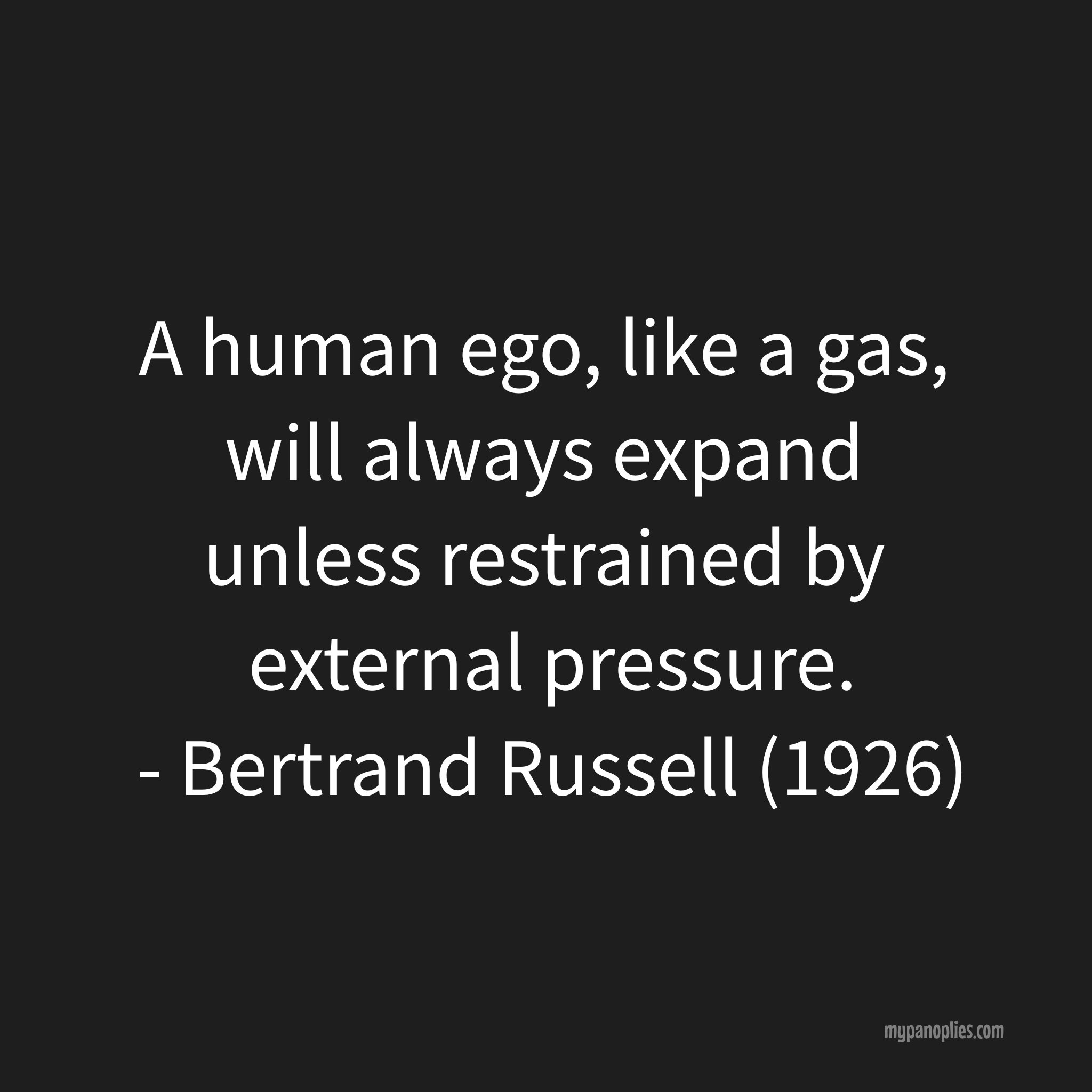
Now we know the correlation of narcissism and self enhancement, with narcissism characterized by an overly inflated ego and self esteem. It is reported that scores on measures of narcissistic personality traits have been creeping steadily upward in recent decades in some cultures (Twenge, Konrath, Foster, Campbell, & Bushman, 2008). Twenge and Campbell (2009) argue that several interlocking factors are at work here, namely increasingly child-centered parenting styles, the cult of celebrity, the role of social media in promoting self-enhancement which sometimes hidden in the name of self-love.
A self-enhancer employs a variety of strategies to enhance their self worth. For example they can downplay skills they lack and criticize others that seem to be better in comparison. They sometimes self-enhance by remembering only their strengths and not their weaknesses. Also called selectivity or selective memory.
Then there’s selective acceptance, it involves taking as fact self-flattering or ego-enhancing information with little regard for its validity. Whatever strategy they use, having a self enhancer as your friend or companion is somehow toxic.
The ultimate driving force here – they are above everyone else, that they have more positive attributes and a more positive future outlook compared to others.
Disclaimer: This post does not intend to replace, dictate or fully define diagnosis and treatment by a qualified physician. It is intended only for informative purposes.













 mypanoplies