Posted in life

Self Enhancement Bias

In Psychology, Self Enhancement is a common emotional bias. Also called self-enhancing bias. It is different from self improvement which is the act of bettering oneself.


We encounter the word bias, mostly for K-pop, to favor/lean towards to someone or something. In this case – to oneself. People engage in self-enhancement whenever they seek, interpret, or distort evidence about themselves in a way designed to maintain, create, or amplify a positive self-image.
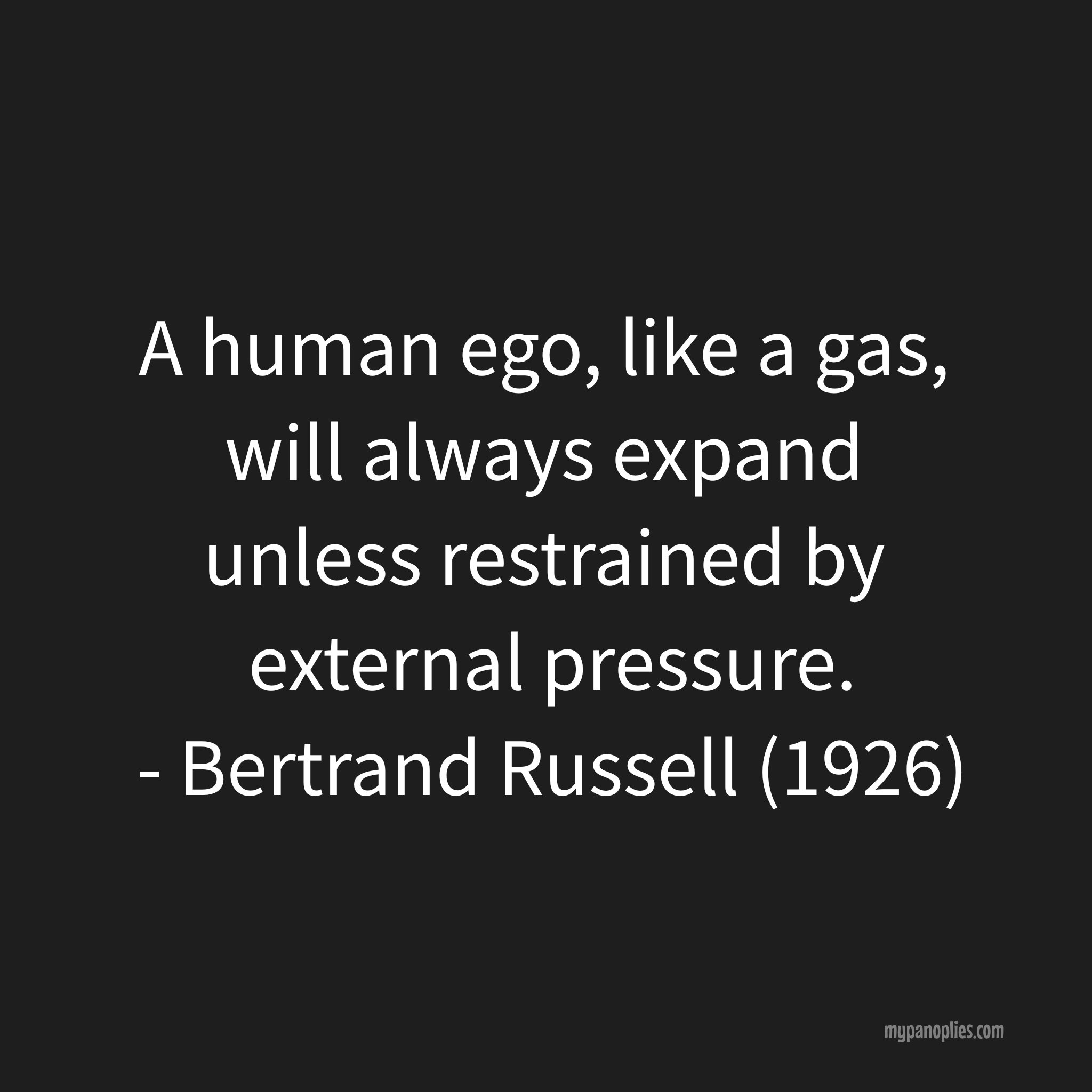


Self-enhancement involves a preference over positive over negative self-views. It is said to be prominent in situations of threat, blows or failure to ones self-esteem.

“The only thing that sustains one through life is the consciousness of the immense inferiority of everybody else, and this is a feeling that I have always cultivated.”

Oscar Wilde

Based on Kwan et al. (2004), there are two concepts in Self enhancement. One conception originated from Festinger’s (1954) social-comparison theory and compares perceptions of the self with perceptions of others. *Social comparison and self insight.

  1. Self-enhancers are those individuals who perceive themselves more positively than they perceive others.
  2. Self-enhancers are individuals who perceive themselves more positively than they are perceived by others.

Research on Narcissism and Self Insight suggests that self enhancement is the fundamental characteristic of narcissism. In fact, narcissism has been called the “self-enhancer personality”.

Now we know the correlation of narcissism and self enhancement, with narcissism characterized by an overly inflated ego and self esteem. It is reported that scores on measures of narcissistic personality traits have been creeping steadily upward in recent decades in some cultures (Twenge, Konrath, Foster, Campbell, & Bushman, 2008). Twenge and Campbell (2009) argue that several interlocking factors are at work here, namely increasingly child-centered parenting styles, the cult of celebrity, the role of social media in promoting self-enhancement which sometimes hidden in the name of self-love.


Pexels.com

A self-enhancer employs a variety of strategies to enhance their self worth. For example they can downplay skills they lack and criticize others that seem to be better in comparison. They sometimes self-enhance by remembering only their strengths and not their weaknesses. Also called selectivity or selective memory.

Then there’s selective acceptance, it involves taking as fact self-flattering or ego-enhancing information with little regard for its validity. Whatever strategy they use, having a self enhancer as your friend or companion is somehow toxic.

The ultimate driving force here – they are above everyone else, that they have more positive attributes and a more positive future outlook compared to others.


  • Disclaimer: This post does not intend to replace, dictate or fully define diagnosis and treatment by a qualified physician. It is intended only for informative purposes.

Articles:

Posted in life, motivational

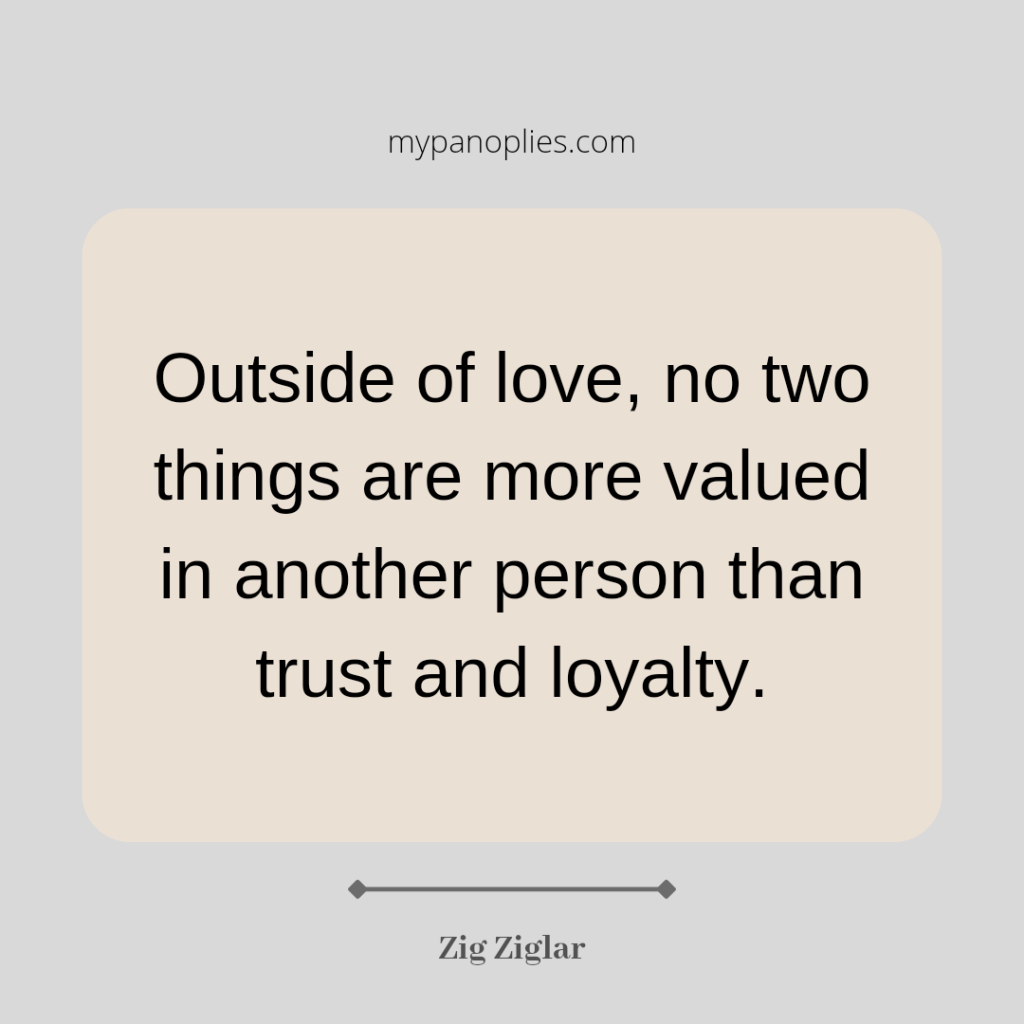
What it means to be loyal

If there’s one substantial quality to have in our relationships – with our loved ones, our family, friends, partners, colleagues, etc. – it could be loyalty. All relationships even between sellers and customers are based on our ability to be loyal.


Loyalty, in general use, is a devotion and faithfulness to a nation, cause, philosophycountry, group, or person. Philosophers disagree on what can be an object of loyalty, as some argue that loyalty is strictly interpersonal and only another human being can be the object of loyalty.

– Wikipedia

We may have different perceptions of loyalty but there are common characteristics that indicate loyalty. It is the most valued virtue in all relationships and encompasses the following traits.

Character Traits of Loyalty

  • a loyal person fulfills promises
  • a loyal person is supportive
  • a loyal person stands by you and for you
  • a loyal person values honesty
  • a loyal person is empathic
  • a loyal person is reliable
  • a loyal person is committed and dedicated


We all want the warmth and security that a loyal relationship brings. We like to be with people who are more likely to be faithful to us. And it is one of the basic necessity according to Maslow’s Heirarchy of Needs – Belongingness and Love Needs.

But remember not to expect other people the exact values we possess. We are all unique and different in personality traits, character, priorities, etc. One can cheat or be faithful to someone forever.

Loyalty is a value that is necessary for a lasting and meaningful relationships.

Posted in life, psychology

What is Gaslighting

In my previous post, we talked about manipulation and sampled the character of Jin Mu from Alchemy of Souls. Fact check, we meet a gaslighter in real life sometimes unaware of it, and so before falling to their trap let me show you ways to spot a gaslighter.

Gaslighting is a colloquialism, loosely defined as making someone question their own reality. The term derives from the title of the 1944 film – Gaslight. The term may also be used to describe a person (a “gaslighter”) who presents a false narrative to another group or person, thereby leading them to doubt their perceptions and become misled, disoriented or distressed.

Wikipedia

Gaslighting is a favorite tool of a toxic person. It is a form of abuse and psychological control. A gaslighter will start with small lies, eventually misinformation increases overtime. Anyone can be a victim of a gaslighting and the most effective gaslighter is the hardest to detect.

Gaslighting can appear in various ways. Here are examples or techniques they use (from Medical News Today);

  • Countering: This is when someone questions a person’s memory or recall. They may say, “Are you sure about that? You have a bad memory,” or “I think you are just forgetful.”
  • Withholding: Pretending they do not understand the conversation, or refusing to listen, to make a person doubt themselves. For example, they might say, “Now you are just confusing me,” or “I do not know what you are talking about.”
  • Trivializing: This occurs when a person belittles or disregards how someone else feels. They may accuse them of being “too sensitive” or overreacting in response to valid and reasonable concerns.
  • Denial: Refusing to take responsibility for their actions. They may do this by pretending to forget what happened, saying they did not do it, or blaming their behavior on someone else.
  • Diverting: With this technique, a person changes the focus of a discussion by questioning the other person’s credibility. A great tactic and often use by personalities to divert the attention from them.
  • Stereotyping: A person may intentionally use negative stereotypes about someone’s gender, race, ethnicity, sexuality, nationality, or age to gaslight them. For example, they may say that no one will believe a woman if she reports abuse.

From the examples listed, you maybe able to detect a gaslighter. As a disclaimer, this behavior becomes toxic based on intentions. And we may accidentally use the phrases sampled above without really intending to gaslight someone. It’s all in the intention or motives of a person.

It is different from Manipulation though. Manipulation is a key part of gaslighting, it’s a common tactic. Can be used in marketing strategies, politics, institutions, etc. But gaslighter, they are very rare and much more toxic.


Gaslighting can be psychologically devastating. According to Psychology Today, it violates trust, upends a person’s view that people are generally good, and can make them suspicious of everyone who is close to them. Falling victim to a gaslighter also erodes a person’s trust in themselves and may make a victim never want to be part of a relationship again.

There are ways to protect yourself from this form of abuse. First to simply gather evidence, write journals, take photos, etc. and use them as your proof. You may also talk to someone trustworthy and if needed, leave that toxic relationship.

Posted in life, motivational

why do people change

Listening to For Youth of BTS while writing this post…


Change seems to be one of the scariest word in the dictionary. Everything changes, it’s inevitable. It’s an evolution, a transition that we all face in a lifetime.

There are reasons why people change may it be for the better or worse.

  1. they have learned a lot
  2. they have suffered enough
  3. life changing event or situation

I have seen some people around me who have changed. It was sad when they revealed their true colors over time. When they meet someone new, someone more interesting than you. Asking yourself, “what happened to them?”

People change because either they chose to or they are forced to. And it may be as part of growth and evolution. You have contemplated and wanted to improve your old habits and behavior. This intentional change is more likely to last long with the intention of wanting the better version of yourself.

Life is a journey, as the saying goes. There’s so much that you can learn along the way. You’ll meet a certain person that motivates and inspires you. And there is that eye-opening event/s that will shape your mind and your life – perhaps forever…

Photo by ShonEjai on Pexels.com

Posted in motivational

Signs of high EQ

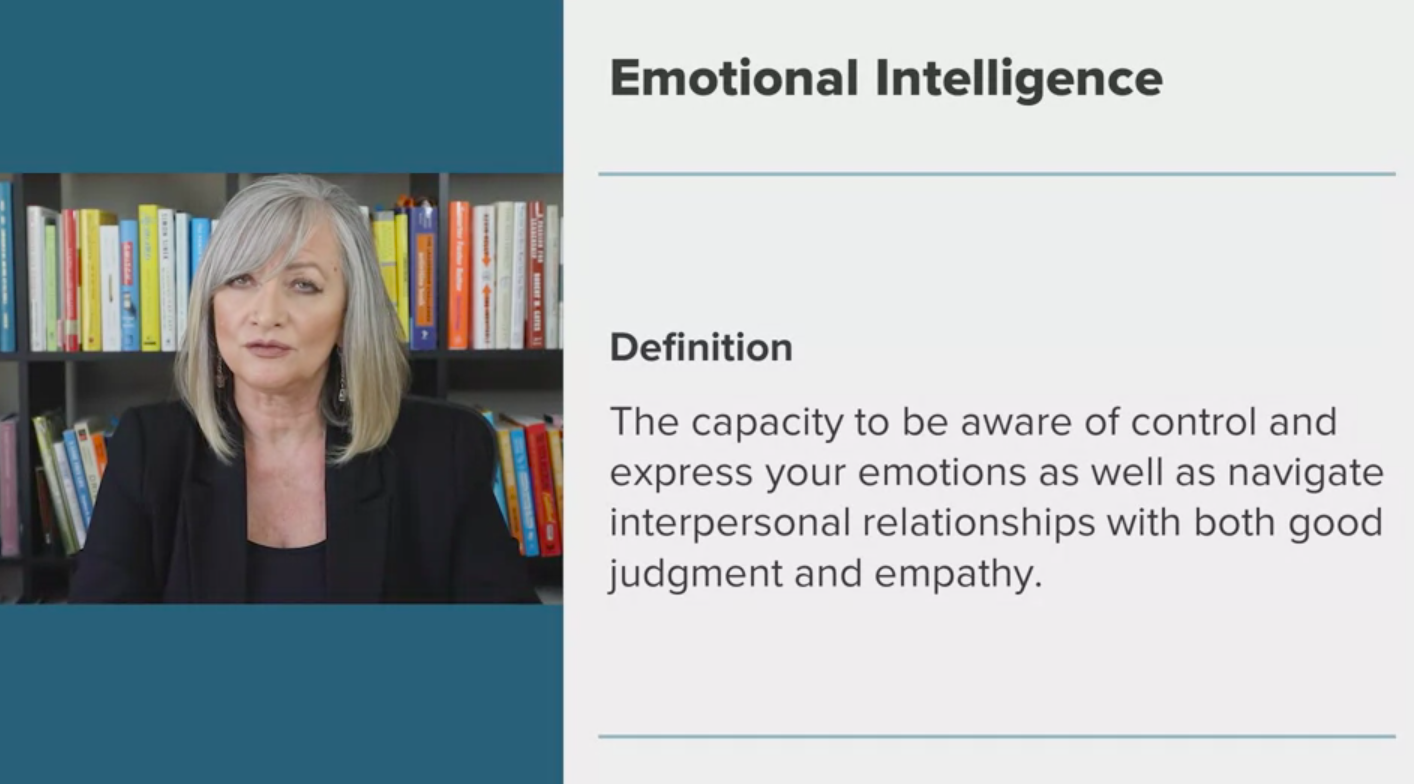
As part of my note taking in Emotional and Social Intelligence ESI (UC Davis) – a course I’m currently taking online. Here are the signs of a person, employee or co-worker with high EQ (emotional quotient) or EI (emotional intelligence).

But first we define Emotional Intelligence or EQ as the capacity to be aware of control and express your emotions as well as navigate interpersonal relationships with both good judgement and empathy.

EQ/EI affects every aspect in your life and has been proven to be in the top 10 most important workplace skills needed for success according to World Economic Forum (2020).

Professor Laurie Cozart, UC Davis
– UC Davis

More bullet points to remember;

  • EQ is not as a soft skill
  • people with high EQ make more and perform better
  • high EQ is synonymous to high satisfaction
Professor Laurie Cozart – UC Davis
UC Davis

Posted in life, motivational

Life 101: How to not to be toxic

Studying Psychology shows you a myriad of complicated terms, endless name of disorders, personality types, etc. But let’s be practical here, everywhere you go there’s always a “toxic” person. They’re impossible to avoid, can give you negative feelings and worse affect your mental health.

But do you know that Toxic behavior is something that can manifest in us all?

We all have bad days but it is important to be aware of our actions and how they affect the people around us. “Self-awareness” – according to my professor and the author of best selling book Permission to feelMarc Brackett, is the start of becoming an Emotional Scientist.


First, let us learn how to identify a toxic individual.


Being toxic is never fun to be around, you drive people away and usually encounter conflicts and misunderstandings. Keep in mind that these behaviors don’t happen overnight, it is developed through the years and has underlying causes or triggers like childhood trauma. They are actually unconscious and developed over time as their defense mechanism. Not an excuse though, that’s why we begin by realizing if our behavior is already hurting other people.

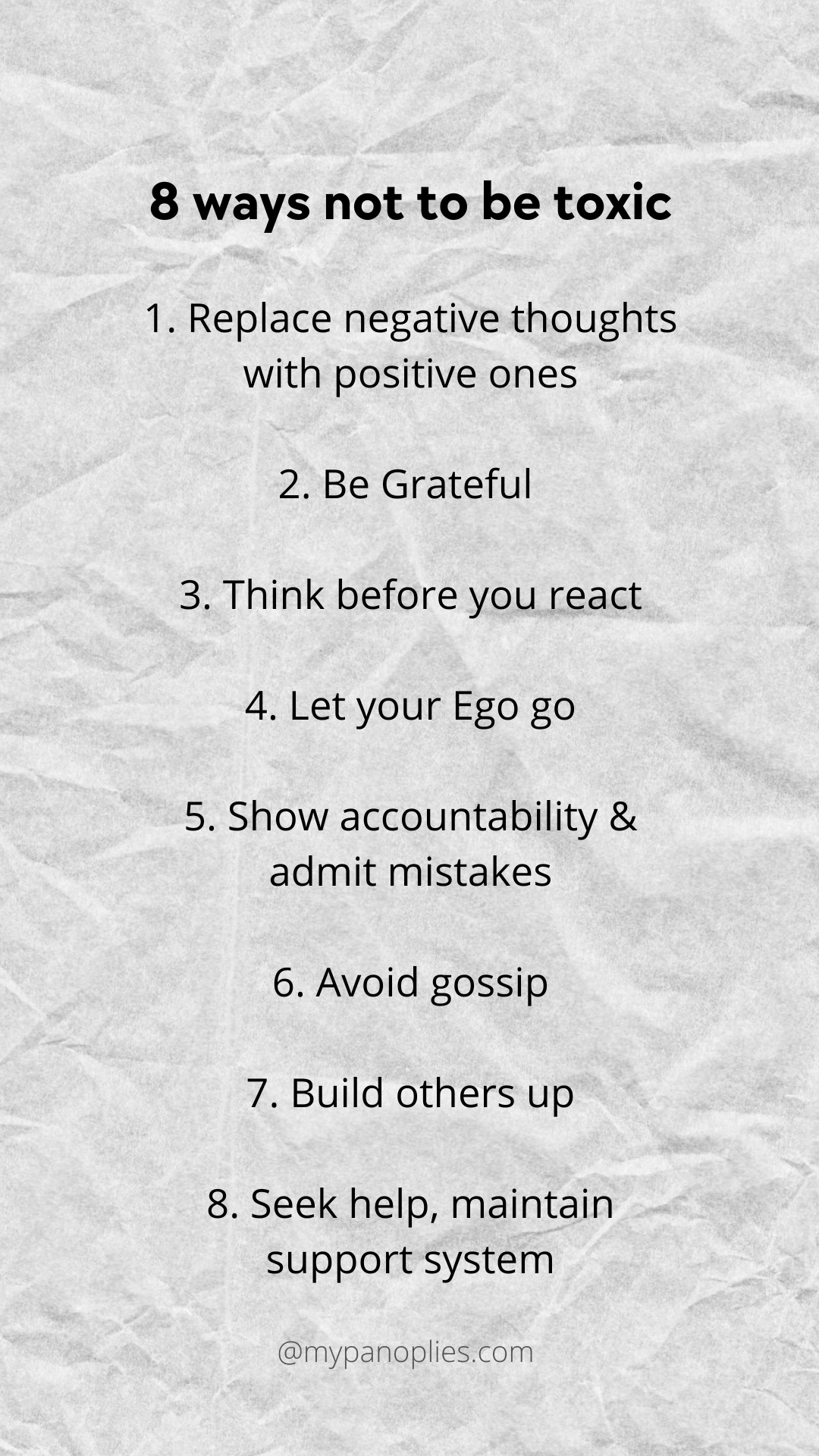
Ways not to be toxic.

1. Replace negative thoughts with positive ones

  • it all starts with your mind, your thoughts drive and guide how you behave.
  • In my psychology course by Yale Center of Emotional Intelligence, we are provided with “thought strategies”.
  • Professor Marc Brackett said that our brain is hay wired to think negatively right away, it is our automatic way of thinking. This is not good for the body as it activates our limbic system.
  • Thinking positively takes time and lot of effort.

2. Be actively Grateful

  • When we practice gratitude, our feelings of accomplishment and satisfaction increase, and the feeling of burn-out decreases.
  • Toxic people are unhappy because they tend to look at the past and for them everything in their life is not good enough.
  • Take a few minutes everyday to be actively grateful. This could be anything from your pet, sunshine or good weather, family, or the roof above your head.
  • If you really want not to be toxic, know that acknowledging the good things in your life lets you focus on them and everything else seems brighter and happier.

3. Think before you react

  • build the habit of pausing before reacting.
  • toxic people are highly reactive, they tend to lash out on people around them.
  • this is the best time to practice being a better listener, so instead of reacting try to listen first.
  • being an active listener shows that you care.

4. Let your ego go

  • a toxic person is desperate to maintain a certain image to the point of attacking others, or being defensive and becoming a habitual liar.
  • they believe they’re entitled and people are beneath them.
  • accept that nobody’s perfect and that you’re not always correct.
  • kindness is free and without your ego this is easy.

5. Show accountability

  • this is related to ego, apologizing is like admitting defeat to a toxic person.
  • admitting you’ve made a mistake and taking responsibility makes it feel you’ve failed.
  • if you’re not able to be accountable for your own wrongdoing — if you dig in, and have to maintain your image — this is a big potential problem. For one, it’s a sign of narcissism.
  • it will be a struggle to maintain a real relationship to someone who can never ever accept fault. It makes other people uncomfortable, denies their emotions or needs, and leaves them feeling wronged too.

6. Avoid gossip

  • here comes “marites” or the gossiper
  • it becomes highly toxic when the objective of the story is to destroy other people and talk about their misfortunes.
  • don’t be too quick to judge others and then spread rumor about them.
  • try to know people first, listen, be kind and considerate.

7. Build others up, not test them

  • we all want to be with someone who celebrates with us. They are happy when you’ve achieved something instead of belittling.
  • this is related to gossiping, if we try to pinpoint the mistakes of other people.
  • real strength is when you uplift and motivate others instead of pulling them down.

8. Seek help

  • if you’re unsure about your own behaviour in certain aspects of life, that’s completely fine. It’ll probably best to act on it right away.
  • whether it’s consulting friends, family, a professional (like a therapist), there are ways to learn more about ourselves and help us improve these areas in our life.
  • toxic behavior doesn’t happen accidentally. It’s likely caused by something in your mind like unresolved issues and past trauma.
  • connecting with others is also a way of healing. Strong social ties are linked with happiness, longevity and health.

Reaching this point means you care about yourself as a person and open to growth and maturity. Don’t worry, being toxic is not forever, it’s not permanent.

“when you let go of who you are, you become who you might be.”

– RUMI

Posted in motivational

Toxic people in your life

Just as environment has its toxins and so is humanity.

In the Philippines, Mental health has a negative connotation so I’ll be using emotional and mental health interchangeably.

“People inspire you, or they drain you

— pick them wisely.”

Hans F. Hansen

What is a Toxic Person?

Toxicity is not considered an illness but there could be underlying causes or trauma behind their toxicity. But how will you know if they are toxic? A toxic person is anyone whose behavior gives negativity and upset to your life. They consistently cause you a negative response and you feel uncomfortable around them.

Before I give you the types, here are toxic behaviors you watch out for;

  • Negativity 
  • Cruelty
  • Gossip
  • Victim Syndrome
  • Drama
  • Craziness
  • Constant lying 
  • Being Manipulative 
  • Enjoy Others Suffering
  • Never Taking Ownership (non-admission of faults) 
  • Refusing to Apologize
  • Being Judgmental
  • Unreliable 
  • Inconsiderate

Just to be clear, we are all imperfect in one way or another. The difference with toxic people is that they “always” manifest the behaviors mentioned above and has destroyed relationships and brought conflicts.

Toxic people defy logic

Forbes.com

I’m studying Psychology because I’d like to know how to deal with different kinds of people. As an entrepreneur, I face a myriad of people everyday. Not to pat myself at the back, but I know I’m a good-hearted person so I need to protect myself and set boundaries. I believe that truly toxic ones are not worth my time and I feel like a portion of my life is deducted or shortened as I deal with them.

Believe it or not, there are 10 types of toxic people. Yes! that many. Maintain your peace and emotional health by being aware of their kind.

10 Types of Toxic People

  1. The Gossiper – we have a term here in the Philippines – “Marites” not sure how they derived that name but gossiper a.k.a. Marites is on the top of the list. What’s sad is they derive pleasure from talking about other people and they seem to celebrate with others’ misfortunes.
  2. The Temperamental – they seem to have anger management issues. It’s also difficult to deal with them as they don’t know how to handle their own emotions and can become explosive.
  3. The Victim – they see themselves as victims. Some may shower you with (superfluous) gifts, sort of bribery then they will open up to you. And you empathize with them, kind-hearted ones can easily fall for this trap.
  4. The Self-Absorbed – inconsiderate and a total narcissist. Fact check – they’re only using you for their benefit.
  5. The Envious – self explanatory and I’ve met many. Perfect to pair with “Marites” as they try to bring down one’s reputation.
  6. The Manipulator – they are a pro in manipulating those around them to get what they want. Another overlapping sign is when they excessively give you gifts and make you ask the question – “for what?”
  7. The Seductive, Overly-Dramatic Person – quoted this from Psychology Today. They’re fun to be with, often the life of the party. They are charming, seductive, physically attractive and do things to attract attention. They focus a great deal of time on outward appearance but really insecure deep inside.
  8. The Narcissistic-Aggressive Person – another from Psychology Today. Coming from the word – narcissism, these individuals are abusive, verbally or physically. They are selfish and aggressive, tend to be adventurous and risk-takers.
  9. The Judgemental – have you heard of the saying – “don’t rain on my parade” The judgemental are quick to tell you what’s wrong about your decision. They only see your faults and look down on others. Nothing is ever good enough for them.
  10. The Arrogant – arrogance is false-confidence and always masks insecurities.

Everything begins with awareness.

If you know someone who is toxic and there’s no way to avoid them, don’t fret. You may not be able to physically avoid them but you can set boundaries. First identify them and maintain a safe “emotional” distance. Expect the behavior/s mentioned above so you’ll be well prepared to “rationally” face them. You are now equipped but don’t ever try to engage or mix into the chaos. Call them out if they do something wrong to you.

Always choose peace. Respond and don’t react, I know it’s easier said than done but I’m just being optimistic here. For normal people like you and me, there’s hope and peace.

Posted in life

Character Strengths

VIA Character Strengths

In my Positive Psychology class by University of Pennsylvania, we are asked to take the VIA Character Strengths. Unlike the popular MBTI, this test is about character, our signature strengths. If you are curious to take it, link is here. It is free with a payment option for extra features.

Big 5 Character Traits

  1. Openness
  2. Conscientiousness
  3. Extraversion
  4. Agreeableness
  5. Neuroticism

Allow me to share the results of mine –

According to VIA Survey:

  1. Spirituality (transcendence) – having coherent beliefs about the higher purpose and meaning of the universe; knowing where one fits within the larger scheme; having beliefs about the meaning of life that shape conduct and provide comfort.
  2. Honesty (courage) – speaking the truth but more broadly presenting oneself in a genuine way and acting in a sincere way; being without pretense; taking responsibility for one’s feelings and actions.
  3. Appreciation of Beauty & Excellence (transcendence) – noticing and appreciating beauty, excellence, and/or skilled performance in various domains of life, from nature to art to mathematics to science to everyday experience
  4. Fairness (justice) – treating all people the same according to notions of fairness and justice; not letting feelings bias decisions about others; giving everyone a fair chance.
  5. Curiosity(wisdom) – taking an interest in ongoing experience for its own sake; finding subjects and topics fascinating, exploring and discovering.

Remember that there’s no right or wrong answer. And your character strengths are key elements to living an authentic and meaningful life. Research shows that people who use their strengths are 18 times more likely to be flourishing than those who do not. By knowing and using your characters can help you be happier and more confident, improve areas in your life (relationships), and manage problems and stress.

Sources

  • Psychology Today
  • VIA Character Survey
  • Positive Psychology by Prof. Martin Seligman (Father of Positive Psychology – University of Pennsylvania)
Posted in life

Help fight depression

Help fight Depression and watch for signs listed below. The DSM-5 outlines the following criterion to make a diagnosis of depression. The individual must have at least 5 or more of these symptoms for a minimum of 2 weeks.

1. Sad mood most of the day, nearly everyday
2. Loss of interest (hallmark of MDD)
3. Significant weight loss/gain
4. Sleep disturbance
5. Psychomotor slowness – slowing down of thought and a reduction of physical movement
6. Fatigue
7. Feelings or worthlessness, low self esteem
8. Indecisive and not being able to focus
9. Thoughts of suicide or death and/ or a suicidal attempt.

Get help:
☎️
Hope line: 0917-5584673 0918-8784673
Tawag Paglaum: 0939-9375433 0939-9365433 0927-6541629